Where self-install genuinely works, and the one line it legally cannot cross
The DIY-versus-professional decision for a Belle Terre business has one legal fact and many sales pitches on both sides. The fact, the fair cost comparison and the scaling limits are below.
Two free marketplace paths: one form brings back multiple vetted installers who know they are competing for the job.
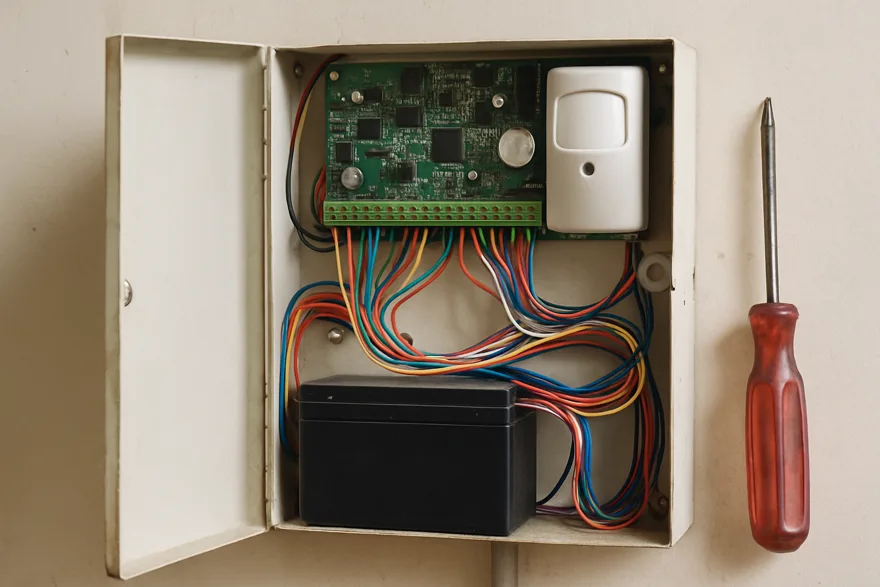
Business alarm systems quoted around Belle Terre run $500-$2,000 installed for basic setups in 2026 industry guides - typical installs $1,500-$3,000 - and the number to compare is the install price plus the full monitoring-contract total.
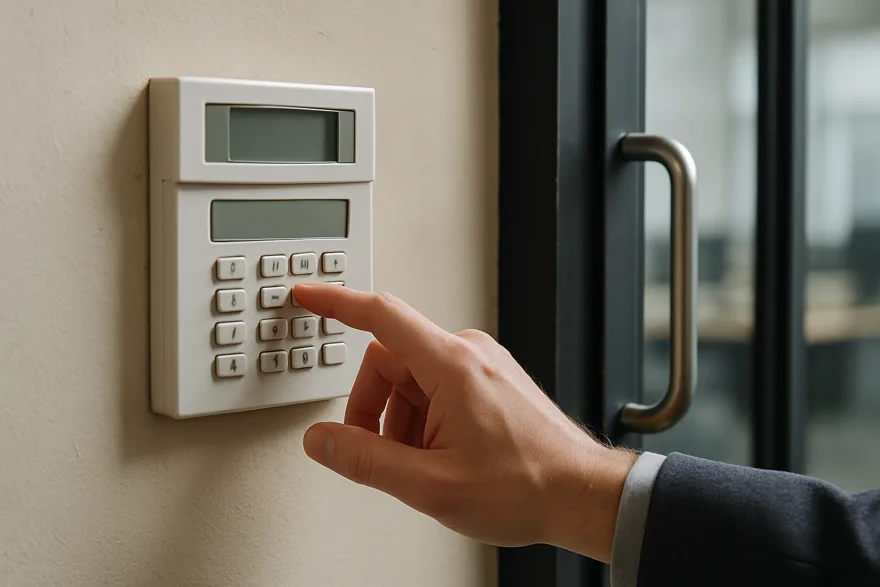
Alarm monitoring for a Belle Terre small business commonly runs $50-$100 a month on a 36-month contract - and commercial fire alarm monitoring must go through a UL-listed central station under NFPA 72, so that line is not optional.
Median household income in Belle Terre's county (Suffolk County) is $125,969 per Census SAIPE 2024 - the local economy every security installer in the area prices against.
The DIY-versus-professional decision has one legal fact and many sales pitches. The legal fact: commercial fire alarm monitoring must go through a UL-listed central station under NFPA 72 and local fire code - self-monitoring is not an option there regardless of budget.
DIY systems are real and cheaper upfront; professional installs are real and dearer upfront. The honest comparison runs on your door count, your fire-code obligations and who answers at 3 a.m. - not on either side's brochure.
The 2026 numbers
| Security category | 2026 published range | The number that actually matters |
|---|---|---|
| Business alarm system (installed) | $500-$2,000 basic; $1,500-$3,000 typical | The install price next to the full monitoring-contract total - not alone |
| Alarm monitoring (small business) | $50-$100/month | 36-month terms are standard; the renewal clause decides the real end date |
| Monitoring contract term | 36 months typical (12-60 range) | Miss the 30-60 day notice window and many contracts renew 3-5 more years |
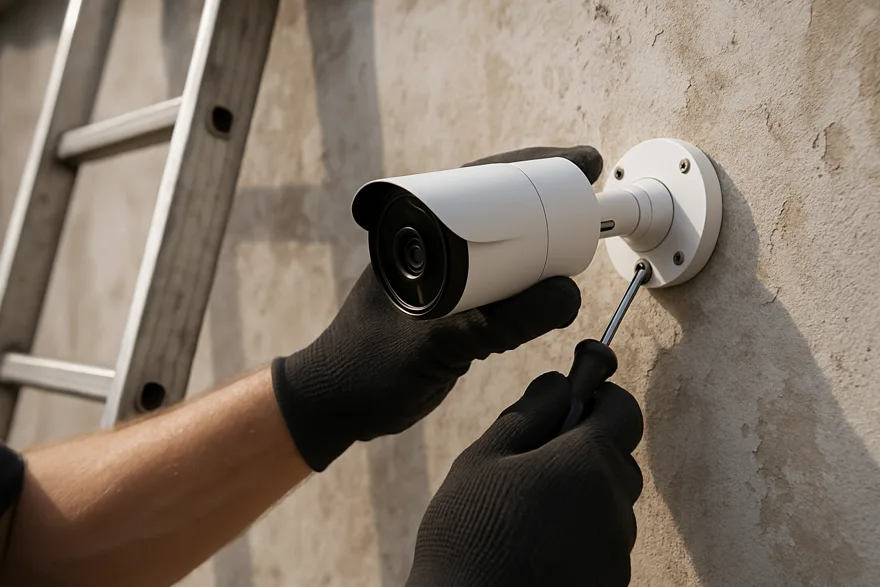
| Commercial cameras | $100-$1,500 each ($150-$600 typical installed) | Recording is the second budget: NVR $400+ once, or cloud $10-$30/camera/month forever |
| Access control (per door) | $900-$4,000 installed | The 4x spread is bundling, not technology - demand a scope list per door |
| False alarm fines (municipal) | $50-$300 per incident, escalating | 94-98% of alarm calls are false (DOJ-funded guide) - fines exist because of it |
| Full integrated system (small-mid business) | $8,000-$30,000 | Real if you need alarm + doors + cameras together - needs first, then quotes |
Put a security needs assessment out to competing bid before talking price
Two free marketplace paths: one form brings back multiple vetted installers who know they are competing for the job. Competing quotes are the only pricing discipline this industry consistently respects.
External links go to the marketplaces' own sites and forms. This site may earn a referral fee at no cost to you - it never changes the data above, and no individual installer pays to appear in our research.
The one hard line: commercial fire monitoring
Commercial fire alarm monitoring must go through a UL-listed central station under NFPA 72 and local fire code - self-monitoring is not a legally permitted option for virtually all commercial properties, regardless of budget or app quality. Every other line in the DIY-vs-pro comparison is economics; this one is law.
The fair comparison
DIY is honestly cheaper upfront - equipment only, no labor - and honestly limited: placement errors are common, most tiers lack UL-listed monitoring, and multi-door access control does not scale without a rebuild. Professional installs cost more and buy correct placement, fire-code compliance, integration and a 24/7 answer. Every guide in this space is written by someone selling one side - the honest tiebreakers are your door count, your fire-code obligations and who answers at 3 a.m.
The stale-advice warning: landline monitoring is over
Older articles still pitch landline (POTS) monitoring as the cheap, reliable default. That advice is now wrong: the 3G networks many older communicators used shut down in 2022, and the FCC's August 2022 order (19-72A1) released phone companies from any obligation to keep copper landline service running - major carriers are decommissioning copper through 2029. LTE cellular communicators are the current industry standard; any new quote with a landline or 3G communicator is installing tomorrow's stranded system.
What this means in Belle Terre
A security quote is only as good as the contract under it: the equipment price is negotiated once, but the monitoring clauses bill you every month for 36 months - and renew if you forget them.
This page is independent research, not legal, insurance or purchasing advice. Licensing rules, alarm ordinances and fine schedules are set by states and cities and change - verify current requirements with your state licensing board and your city's alarm program before acting.
Common questions
Do I need an alarm permit for my business?
In most mid-size and larger US cities, yes - a permit before the monitored system is activated, often tied to a false-alarm reduction program. Operating without one commonly draws fines up to $500, and some cities bill per day. The schedules are municipal, so the specific numbers live in your city's code - the pattern (register first, free responses, then escalating fines) is close to universal.
How much does access control cost per door?
Published 2026 ranges run roughly $900-$4,000 per controlled door installed - a wide spread because 'per door' bundles different things in different quotes: some include the panel, wiring, labor and first-year software licensing, others price bare hardware. Readers alone run $80-$300 for proximity/RFID and $300-$1,200+ for biometric, and cloud management software adds a per-door monthly subscription.
Will a security system lower my business insurance?
Commonly yes, for professionally monitored systems - published ranges cluster from single digits to about 20% off the property premium depending on insurer, policy and system components. No precise universal percentage exists, and self-monitored setups often do not qualify - confirm the actual discount with your carrier before counting the savings in your payback math.
Does my landline still work for alarm monitoring?
It is on a sunset path. The 3G networks that many older communicators used shut down in 2022, and the FCC's August 2022 order released phone companies from any obligation to keep copper landline service running - retirement has accelerated since, with major carriers decommissioning copper through 2029. LTE cellular communicators are the current industry standard; any quote pitching landline as the cheap, reliable path is reading from an old script.
How much is commercial alarm monitoring per month?
Small businesses with basic systems commonly pay about $50-$100 a month; large or complex facilities run several hundred. One hard rule hides in the fine print: commercial fire alarm monitoring must go through a UL-listed central station under NFPA 72 and local fire code - self-monitoring is not a legal option there, whatever a DIY brochure implies.
Put a security needs assessment out to competing bid before talking price
Two free marketplace paths: one form brings back multiple vetted installers who know they are competing for the job. Competing quotes are the only pricing discipline this industry consistently respects.
External links go to the marketplaces' own sites and forms. This site may earn a referral fee at no cost to you - it never changes the data above, and no individual installer pays to appear in our research.
Prices in nearby cities
Bellerose · Bellport · Belmont · Bemus Point · Bergen · Binghamton · Black River · Blasdell · Bloomfield · Bloomingburg · Bolivar · Boonville