Installed ranges, the monitoring contract underneath, and the honest total
An alarm quote in Allen is two prices wearing one signature: the hardware install and the monitoring contract that rides under it for 36 months. Both are priced below, with the multiplication most quotes skip.
Two free marketplace paths: one form brings back multiple vetted installers who know they are competing for the job.
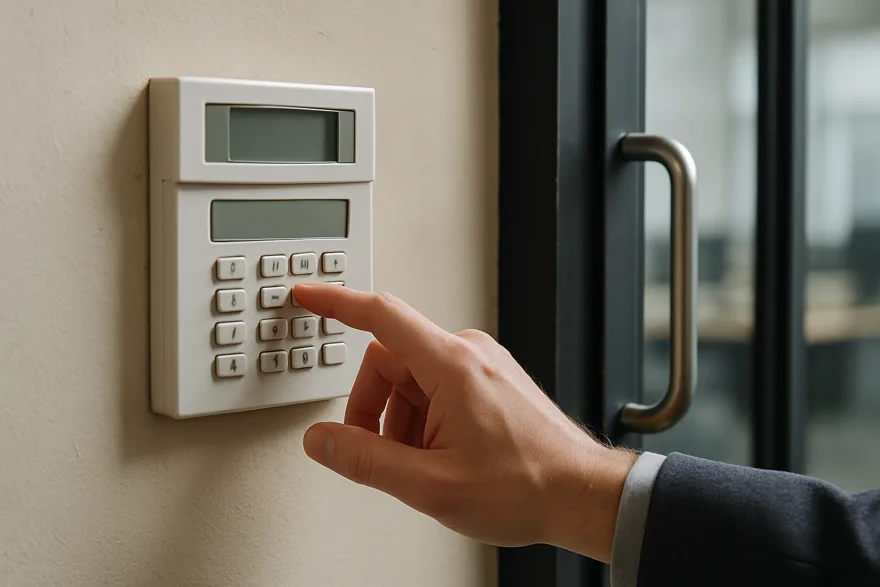
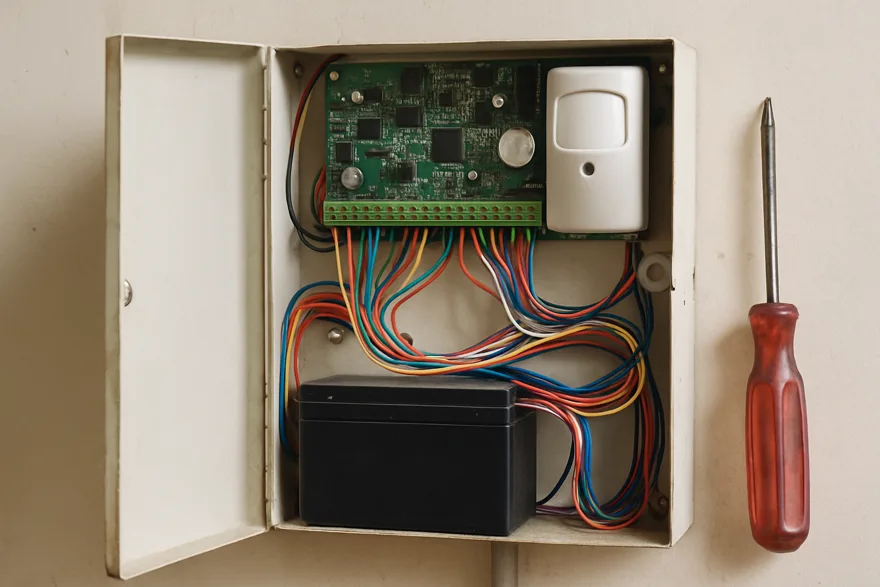
Business alarm systems quoted around Allen run $500-$2,000 installed for basic setups in 2026 industry guides - typical installs $1,500-$3,000 - and the number to compare is the install price plus the full monitoring-contract total.
Alarm monitoring for a Allen small business commonly runs $50-$100 a month on a 36-month contract - and commercial fire alarm monitoring must go through a UL-listed central station under NFPA 72, so that line is not optional.
Allen plus 6 surrounding communities within 40 km hold about 19,446 people - enough market density for multiple installers, which is exactly the competition a quote request should exploit.
A business alarm quote in Allen is really two prices: the installed hardware and the monitoring contract riding under it. The second one compounds monthly for 36 months - price them separately before comparing anything.
Basic small-business alarm systems install for hundreds, not thousands - the integrated systems quoted at five figures serve real needs, but only if you actually have them. Needs first, then quotes.
The 2026 numbers
| Security category | 2026 published range | The number that actually matters |
|---|---|---|
| Business alarm system (installed) | $500-$2,000 basic; $1,500-$3,000 typical | The install price next to the full monitoring-contract total - not alone |
| Alarm monitoring (small business) | $50-$100/month | 36-month terms are standard; the renewal clause decides the real end date |
| Monitoring contract term | 36 months typical (12-60 range) | Miss the 30-60 day notice window and many contracts renew 3-5 more years |
| Commercial cameras | $100-$1,500 each ($150-$600 typical installed) | Recording is the second budget: NVR $400+ once, or cloud $10-$30/camera/month forever |
| Access control (per door) | $900-$4,000 installed | The 4x spread is bundling, not technology - demand a scope list per door |
| False alarm fines (municipal) | $50-$300 per incident, escalating | 94-98% of alarm calls are false (DOJ-funded guide) - fines exist because of it |
| Full integrated system (small-mid business) | $8,000-$30,000 | Real if you need alarm + doors + cameras together - needs first, then quotes |
Put a business alarm system out to competing bid before talking price
Two free marketplace paths: one form brings back multiple vetted installers who know they are competing for the job. Competing quotes are the only pricing discipline this industry consistently respects.
External links go to the marketplaces' own sites and forms. This site may earn a referral fee at no cost to you - it never changes the data above, and no individual installer pays to appear in our research.
When the five-figure integrated quote is honest
A fuller integrated system - alarm plus a few access-controlled doors plus cameras - commonly lands at $8,000-$30,000 in 2026 guides. That is a real price for a real need; the question is whether Allen operations like yours have the need, or whether a $1,500-$3,000 alarm covers the actual risk. Needs first, then quotes.
The insurance offset, honestly stated
Professionally monitored systems commonly earn a commercial property insurance discount - published ranges cluster from single digits to about 20%, varying by insurer and system. No universal percentage exists, and self-monitored setups often do not qualify: confirm the actual discount with your carrier before counting it in the payback math.
What this means in Allen
The most expensive line in a security contract is the one that renews itself: miss the written-notice window - commonly 30-60 days before term end - and many contracts sign you up for another 3-5 years at the same or higher rate.
This page is independent research, not legal, insurance or purchasing advice. Licensing rules, alarm ordinances and fine schedules are set by states and cities and change - verify current requirements with your state licensing board and your city's alarm program before acting.
Common questions
Should I choose cloud or local storage for cameras?
Local NVR storage costs once - roughly $300-$700 in hardware plus a hard-drive swap every few years - and keeps footage on your premises. Cloud storage bills every camera every month ($10-$30 typical) and survives theft or fire of the recorder. Neither is wrong; the honest math is your camera count times the monthly cloud fee, compared over five years against the NVR you would buy.
How long are security monitoring contracts?
Thirty-six months is the industry-standard term, with 12-60 months the observed range - longer terms typically trade for lower monthly fees or 'free' equipment. The clause to read is the renewal: many contracts renew for another full term of 3-5 years unless you cancel in writing inside a 30-60 day window near term end. Calendar that window the day you sign.
Why do cities fine false alarms?
Because 94-98% of burglar-alarm calls to police are false, per the DOJ-funded Center for Problem-Oriented Policing guide - a widely-cited 2002 DOJ-era estimate put the national cost near $1.5-1.8 billion a year, and no newer comprehensive count has replaced it. Most mid-size and larger cities now require alarm permits and charge escalating fines, commonly $50-$300 per false alarm after one to three free responses.
How much is commercial alarm monitoring per month?
Small businesses with basic systems commonly pay about $50-$100 a month; large or complex facilities run several hundred. One hard rule hides in the fine print: commercial fire alarm monitoring must go through a UL-listed central station under NFPA 72 and local fire code - self-monitoring is not a legal option there, whatever a DIY brochure implies.
Does my landline still work for alarm monitoring?
It is on a sunset path. The 3G networks that many older communicators used shut down in 2022, and the FCC's August 2022 order released phone companies from any obligation to keep copper landline service running - retirement has accelerated since, with major carriers decommissioning copper through 2029. LTE cellular communicators are the current industry standard; any quote pitching landline as the cheap, reliable path is reading from an old script.
Put a business alarm system out to competing bid before talking price
Two free marketplace paths: one form brings back multiple vetted installers who know they are competing for the job. Competing quotes are the only pricing discipline this industry consistently respects.
External links go to the marketplaces' own sites and forms. This site may earn a referral fee at no cost to you - it never changes the data above, and no individual installer pays to appear in our research.
Prices in nearby cities
Anchorage · Arlington · Ashland · Auburn · Audubon Park · Augusta · Bancroft · Barbourmeade · Barbourville · Bardstown · Bardwell · Barlow